The Great Below

living the feeling life


Writing memoir – “A Death in the Family”

Knausgaard, Karl Ove


A Death in the Family.JPG


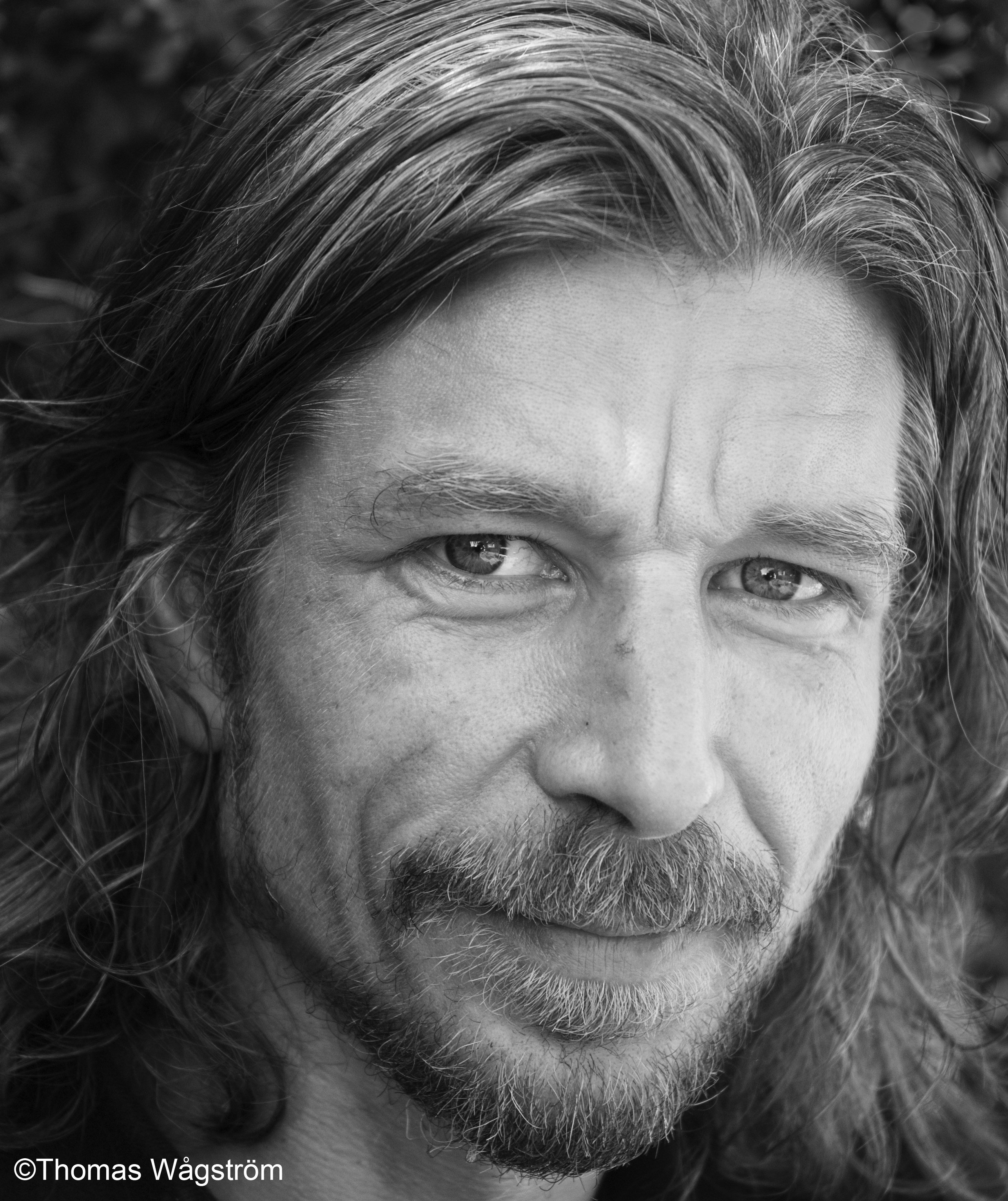
I’ve just finished reading A Death in the Family, volume one of Norwegian Karl Ove Knausgaard’s remarkable seven-part novel/memoir My Struggle. The book covers in intense detail several periods of Knausgaard’s life: as a disaffected teenager living in a small Norwegian town; in his thirties dealing with the fallout of his father’s death ; in the ‘present’ as a married father of three living in Sweden. The narrative expands and collapses time, moving back and forth between then and now, or then and then, to reveal and explore the author’s troubled relationship with his father.

There is almost microscopic scrutiny of certain episodes – he devotes seventy pages, with many digressions, to his attempt as a teenager to buy alcohol on New Year’s Eve – while others, such as his father’s last few years of life and descent into alcoholic ruin, are dispatched in a few paragraphs. (Perhaps I’ll learn more from the subsequent volumes.)

I was confused at first by the label ‘novel’ for what is clearly an autobiographical story, told with searing honesty from the point ot view of the writer. (I gather Knausgaard has fallen out with half his family, which is not surprising given the revelatory nature of the writing.) But I get it – the conversations, descriptions, the moment-by-moment narrative that seems to put you right inside the author’s head as it is happening – these are creations rather than memories, but creations of such detail and intensity that they take us right to the emotional truth of the situation and seem completely real. It has been described as “densely ordinary” by one critic, who added “Even when I was bored I was interested”. Slow as it might sound, it is an extremely compelling read.

Though it reminds me most of Virginia Woolf’s stream-of-consciousness in Mrs Dalloway, Knausgaard says he was influenced by Proust’s A La Recherche du Temps Perdu. ( Personally I have never managed to get further than a few pages into this book whose title I once saw translated as “When will I ever find the time to read this?”) Two other memoirs which have left me with the same feeling of having touched an ‘inner truth’ are Dave Eggers’ A Heartbreaking Work of Staggering Genius about his parents’ deaths from cancer, and Martin Amis’ Experience  – the only book by him I have ever wanted to read – which tells, amongst other things, of his cousin’s abduction and murder by Fred and Rosemary West.

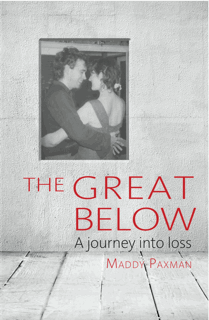
A Death in the Family reminded me that I have strong visual memories of certain periods of my life, but whether I could find the words to describe them, or even be bothered, is another question. In writing, and particularly in editing, The Great Below I worked hard to find the emotional truth of a situation without necessarily narrating every last detail of the story. In fact it felt necessary to condense certain anecdotes in order not to lose the overall flow of the main story. I even shifted a particular experience from one country to another, in order not to turn the book into a travelogue. I made a conscious decision not to name the people I wrote about, feeling that they did not ‘belong’ to me as material for the book even though they had played a part in the events.

But if only one person who reads the book feels the kind of gratitude I felt to these other authors, for simply telling me their story, I will be more than happy.

“My last summer” – talking about death and grief.

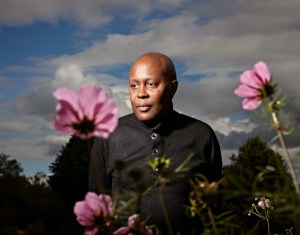
355Z6271last_summer_sI’ve just watched a Channel 4 series called My Last Summer in which five people who are terminally ill come together over the course of a year to share their experiences of facing death. It’s not an easy watch, but like every programme in which people speak honestly and openly about their feelings, it’s compelling and important. The saddest thing is that, having forged deep new friendships and given each other the kind of support that only someone in the same situation is able to offer, they have to face the deaths of three of the group over the course of the filming. In some ways their grief is stronger for each other than for themselves.

Each of them is dealing with their situation differently –  Ben has cut himself off from all his friends and is waiting out his time alone in his flat, while Jane stoically refuses to let her poor health get the better of her, and clings to her dignity and good cheer with an iron grip. The one who really seems to have it sorted is Lou, who has Motor Neurone disease; she faces death with a clear-eyed realism that in no way diminishes her ability to live life in the moment.

I can’t imagine what it’s like to know that you will be gone very soon, perhaps leaving behind young children and grieving spouses. We see the participants’ families coping with their immintent bereavement – some with clarity and practicality, some with denial. How on earth do you explain to young children that mummy or daddy is going to die soon? Should you?

Sonja, the girlfriend/wife (they married 3 hours before his death) of one of the participants, Junior, expresses her raw unmitigated grief at his death straight to the camera, to us, in a very moving way. It made me realise how rare it is to see someone genuinely ‘feeling’ in public. Of course there are more tears on TV than there used to be, but still  people break down in the middle of an unbearably sad story about their lives and then apologise for welling up. Is it just their own embarassment or are they afraid of making others uncomfortable?

Programmes like My Last Summer play an important role in showing us the feeling side of life – how complex it is, how little understood, how hard to express in a world that sees vulnerability as weakness. But there was nothing weak about Sonja’s grief, or about any of the participants’ experience – it was powerful and illuminating, and I’m deeply grateful to them for sharing it.


Haunts?

The other night I watched a programme in which the singer Emeli Sandé goes to Mexico to explore the life and art of Frida Kahlo, who has long been one of my favourite artists; her open-heartedness in depicting raw images of pain in her paintings is breathtaking, whatever you think of her skills as a painter. (The programme itself was slightly annoying, as much about ES as Frida, and shot in a grainy ‘artistic’ music video style that got old very quickly, but it’s here if you want to watch it.)

Emeli Sandé visited Frida’s “Blue House” in Mexico City, which is now a museum in honour of the artist. Michael went there on a reading tour of Mexico, during which he got serious sunstroke, ate an iguana tamale, and came home with suspected hepatitis (he didn’t travel well!). As a young woman Frida Kahlo was in a terrible bus accident which left her in severe pain for most of her life, unable to bear children, and probably contributed to her early death at 47. She began painting to pass the time while confined to bed – a wooden four-poster which is still in the house, and features in one of her best-known paintings.

ImageFrida Kahlo The Dream or The Bed 1940

Frida Kahlo, The Dream or The Bed, 1940

I have a particular connection with this painting: when I was sitting beside Michael’s bed in the National Neurological Hospital where he lay unconscious after a catastrophic brain haemorrhage, I brought along a book of Frida’s paintings. I don’t know why I chose it, but somehow I must have had the feeling that looking at these images of suffering might be illuminating, or at any rate pass the time without needing concentration – at this point we were still hoping he might wake up. This bed, floating in the air between life and death, a skeleton on the canopy, seemed to sum up our experience, as well as reminding me of the Mexican view of death, that it is always present. A Mexican Day of the Dead sculpture was the cover picture on Michael’s second book  of poems Errata (published by OUP in 1994, and later incorporated into Dances Learned Last Night under Picador).

Image

Standing beside Frida’s bed in the Blue House, Emeli commented that she felt that an artist left most of their spirit in the place where they were creative. With a jolt, I realised that the sofa on which I was sitting was exactly in the position where Michael’s desk used to be when this room was his study. After his death, I left it pretty much as it was, full of his books and things, for several years, but eventually I realised that we needed to rebuild our home from the crater around which we were encamped, and turned it into a living room, storing his belongings, including seventy-five boxes of books, up in the loft. (These books will soon form part of the library at the newly refurbished Arvon Centre in Shropshire, The Hurst).

A shiver ran through me at the thought that I was sitting exactly where Michael used to write his poetry. Although I can’t claim to be infused with his spirit, I do sometimes sit on this sofa to write; although I wrote much of my book in bed, like Frida, while I was ill with M.E. Maybe I’ll do it a bit more often from now on.


The Launch

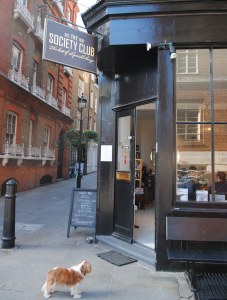
I’ve been to many book launches, but this is the first time I’ve ever had one of my own! On Tuesday evening, we held a party for The Great Below in a funky and charming little Soho bookshop/bar – The Society Club.

booklaunchSOCIETY-CLUB-0031

The evening passed in a bit of of a whirl for me – being something of an introvert I’m better one-to-one and get anxious about not having time to talk to everyone properly. I’m also shy of  the limelight – as a child I used to hide under the table when everyone sang “Happy Birthday” – so to stand up in front of people and blow my own trumpet feels quite daunting. I meant to make an Oscars-style speech, thanking my agent Jennifer Hewson, my publicist Nicolette Praça, and my editor at Garnet Publishing, Mitchell Albert for all their support and belief in me. But somehow I found myself just rambling on about the process of writing the book and what I hoped it would achieve out in the world.

It didn’t feel right to read from my rather sad book at this happy occasion, but there was a piano in the bar and I’d decided to sing two of my songs, settings of poems by my husband Michael Donaghy. Songs don’t really have a life until they are performed, and when else would I have the chance to sing in front of an audience of supportive friends? I made a decent job of playing them, and then recited a poem of Michael’s “The Present”, which I had spoken to him while he was dying, and a line of which is on his gravestone: “Make me this present then, your hand in mine, and we’ll live out our lives in it.”

The irony is that Michael’s death has opened the door for me to become a writer. Well, I have always written things here and there, and when I met him I was writing half-decent poetry. I suppose there’s no reason why you can’t be a writer and be married to another writer; it’s just that he was so damn good, there didn’t seem much reason for me to do it as well.  I have spent a long time as the gardener, and perhaps now it’s time for me to be the rose.

Michael’s spirit was very strong that evening – some of his very dear friends, the people who probably think about him almost as often as I do, were there, and our wonderful son, now all grown-up and confidently chatting to everyone. It seemed fitting to have Michael’s words rather than mine on that occasion – after all, he won’t write any more. Whereas I may be just beginning…


“The Visitors”

It’s funny how often a novel I’m reading turns out to reflect my current preoccupations – after Michael died it seemed every single book I picked up had a death in it, even if not flagged on the cover. I’ve just finished “The Visitors” by Sally Beauman, a long novel about the discovery of Tutenkhamun’s tomb in Egypt in the 1920s, as witnessed by a ten-yeat-old girl who finds herself on the periphery of the community of archeologists working on the dig. This is the main ‘story’, but the overarching theme of the book is loss and grief – the narrative moves back and forth from then to the present, where the young girl is now an old woman of ninety and mourning the ghosts of that time. Without giving too much of the plot away (it’s a long book) she has lost her mother, her baby, her lover, and her best friend – and though many years have passed, these beloved dead still have “their sharp presence, their terrible absence” in her life.


On speaking out

Germaine Greer, in The Change, describes how over time “grief became first a private thing, veiled and silent, then a secret thing, and then a shameful thing.” From the flood of responses to my article in the Daily Mail, it’s clear that many people feel unable to freely speak about grief; perhaps they fear being misunderstood, or even ignored, or they simply don’t have the language for the complicated, confusing world of feelings they’ve been thrust into. To have someone else talk about it openly is a tremendous relief. Of course we are all different, but as one person said: “All griefs are personal but seem to contain many parallel experiences.” The thing I have heard most often in the past week is that something I’ve said resonates with another person’s feelings or experience: “You have told it like it is for me.”

Several people have said I am brave for speaking out, which is interesting. I don’t feel particularly brave, but I did find it harder than I expected to have my private thoughts broadcast so widely and publicly – even though that is exactly my point, that more of us need to feel free to “tell it like it is” for us. That until we express our feelings and experiences more clearly, we will continue to misunderstand each other and not know how to give support.

I’ve also worried about appearing critical of people for not knowing what to say, or how to support a grieving person; for being clumsy, or frightened of saying the wrong thing. But people do the best they can, given what they have been taught, and our society does not teach us emotional intelligence. So each of us meets grief (our own or another’s) totally unprepared for the depth and power of it, and often without the tools to cope. How can we learn to deal better with the world of such feelings except by speaking out? It feels vulnerable and yes, occasionally shameful, to talk so personally about painful emotions (and I’ve had a lot of practice with various therapists!) but the more we do it, the better we’ll get.